9.6.2026
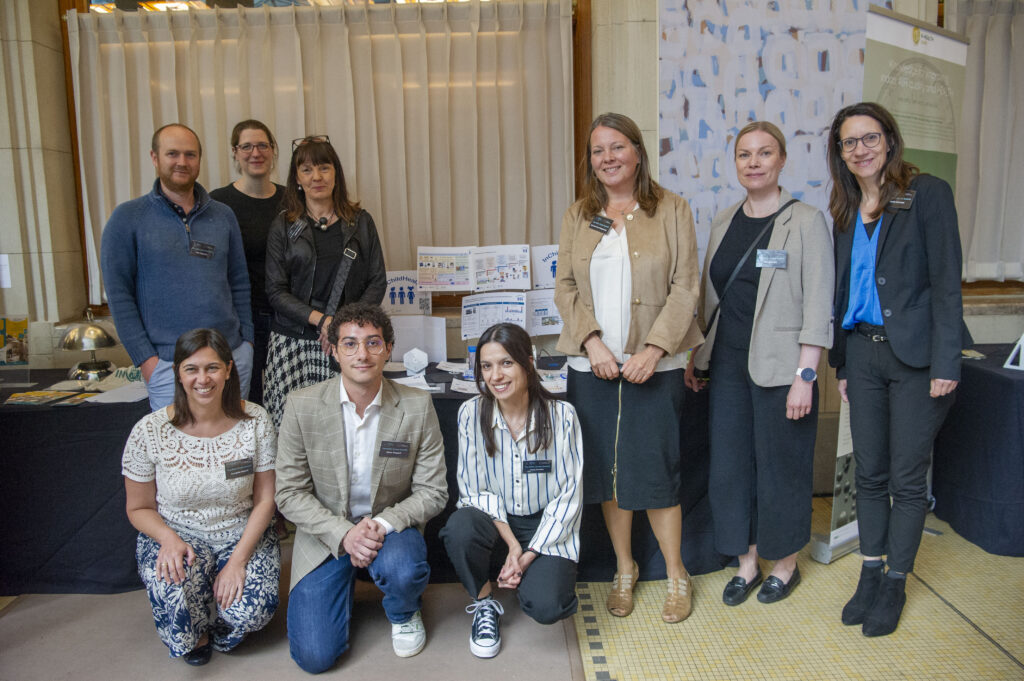
The Horizon Europe project InChildHealth was strongly represented at the IDEAL Cluster Summit in Brussels on 9 June 2026, with several partners contributing to both the scientific programme and the IDEAL Cluster Marketplace, where the team hosted a dedicated stand showcasing key project outputs and activities.
The project was represented by its coordinator, Professor Heidi Salonen (Aalto University, Finland), alongside researchers from most partner organisations. InChildHealth members also contributed actively to the programme: Clara Pogner (Austrian Institute of Technology) presented how the children were involved in Indoor Air Quality studies at their schools, Katrin Vorkamp (Aarhus University, Denmark) spoke about potential health impacts of hazardous chemicals and microplastics, Paula Guedes (Aarhus University) showed InChildHealth results for perfluorinated alkylated substances (PFAS), Robert M.W Ferguson (University of Essex, UK) highlighted the critical balance between ”good” and ”bad” microorganisms in classrooms and Aino-Kaisa Rantala (University of Oulu, Filand) introduced the InChildHealth epidemiological study. All participated in panels where follow-up questions were discussed. Ulla Haverinen-Shaughnessy (University of Oulu), Lila Diapouli (Demokritos National Centre for Scientific Research, Greece) and Mario Raspanti (CSEM, Switzerland), also participated in the summit and supported the marketplace, further reflecting the project’s broad European collaboration.
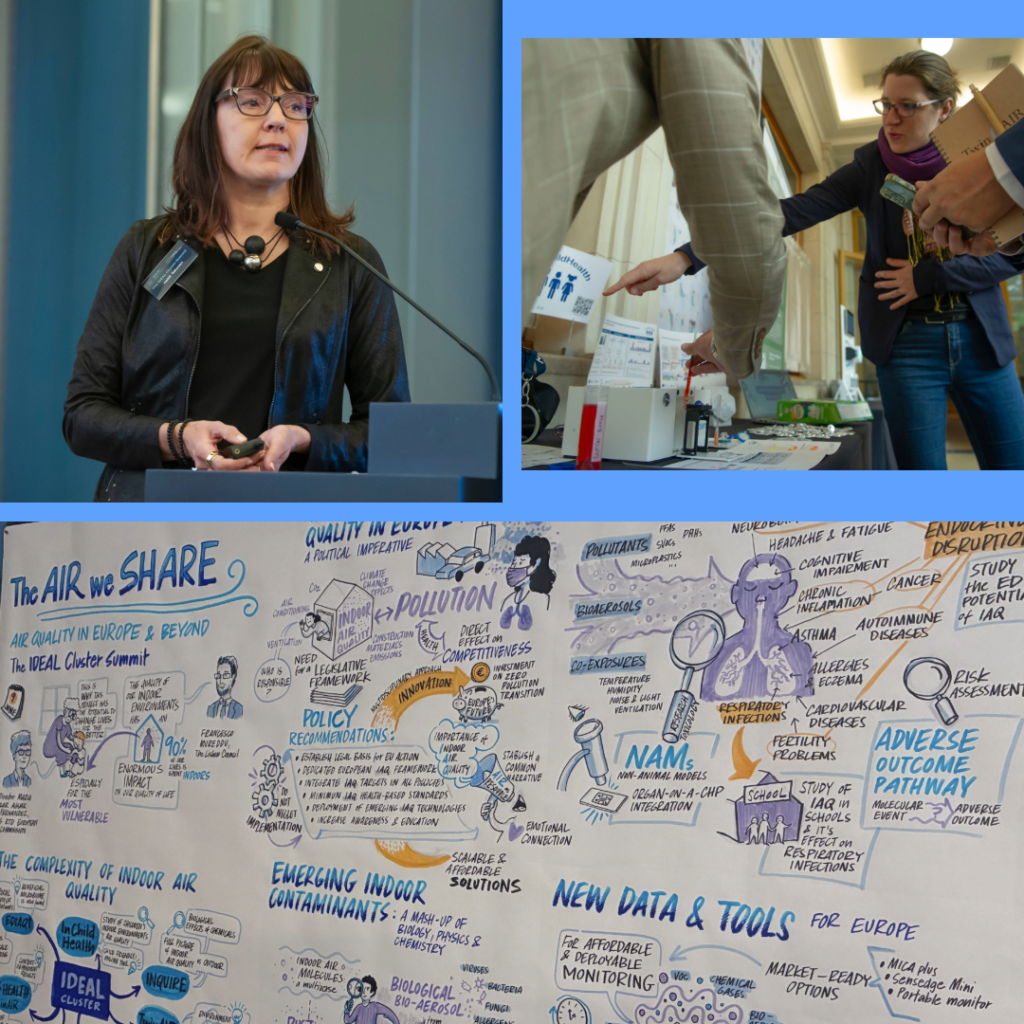
graphic recording by María Foulquié García
The InChildHealth marketplace presented the new methodologies for assessing indoor air quality and exposure, that have been developed or applied in the project.
A key attraction was the project’s science “Indoor Air Explorer” kit for children , designed to support hands-on learning and raise awareness about indoor air quality and health from an early age. The initiative reflects InChildHealth’s commitment to engaging families, schools and communities in understanding indoor environments.
The marketplace provided an opportunity to engage with policymakers, researchers, industry representatives and civil society organisations, reinforcing the importance of collaboration in translating research into practical solutions.
Overall, the strong presence of InChildHealth at the summit underscored its contribution to new knowledge on indoor environments and its commitment to bridging science, policy and society to improve children’s health. The collaboration with the IDEAL cluster partners will be continued with the development of an Indoor Air Quality Roadmap.